
All ye know on earth
On life, art, Raphael

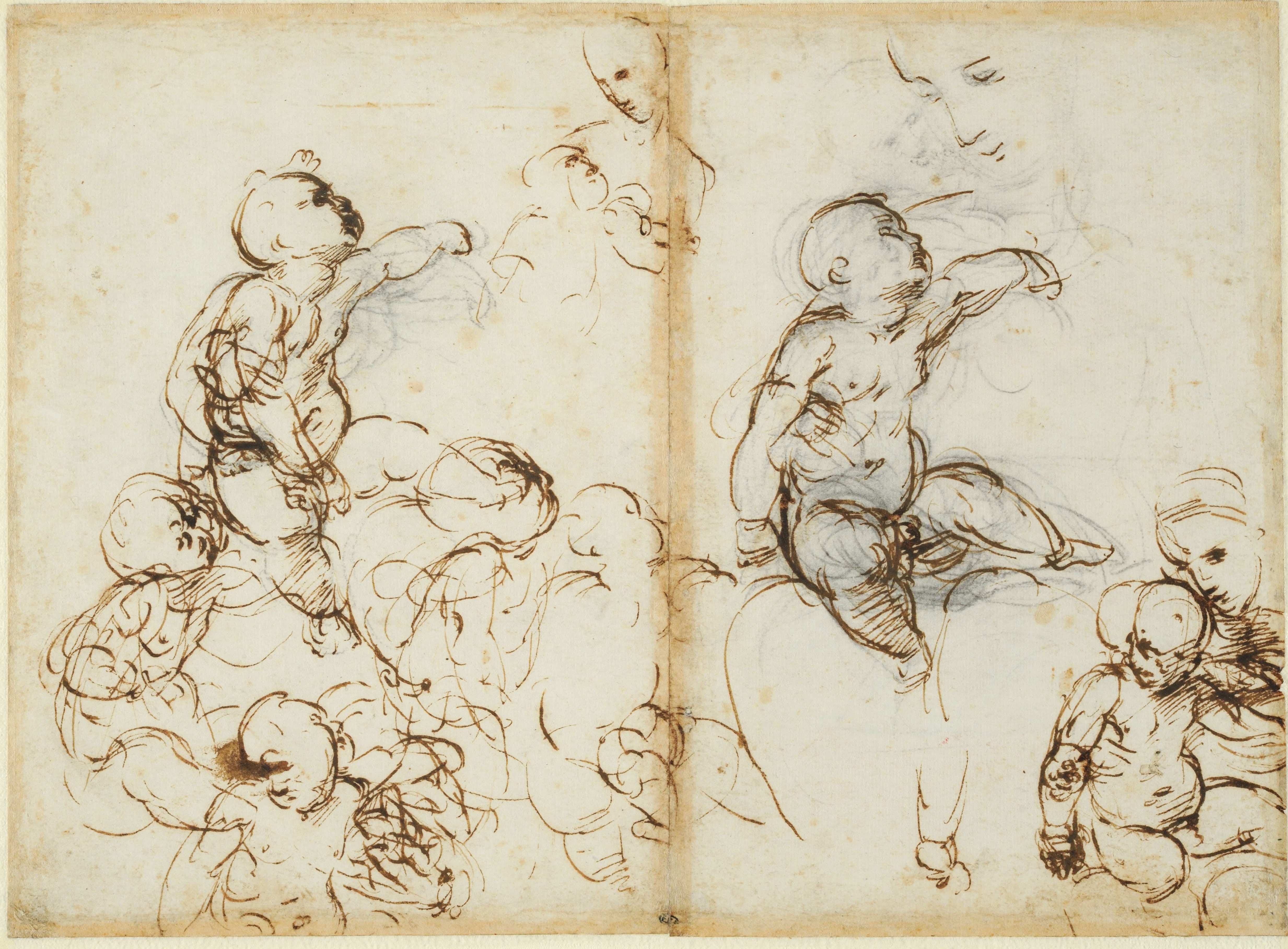
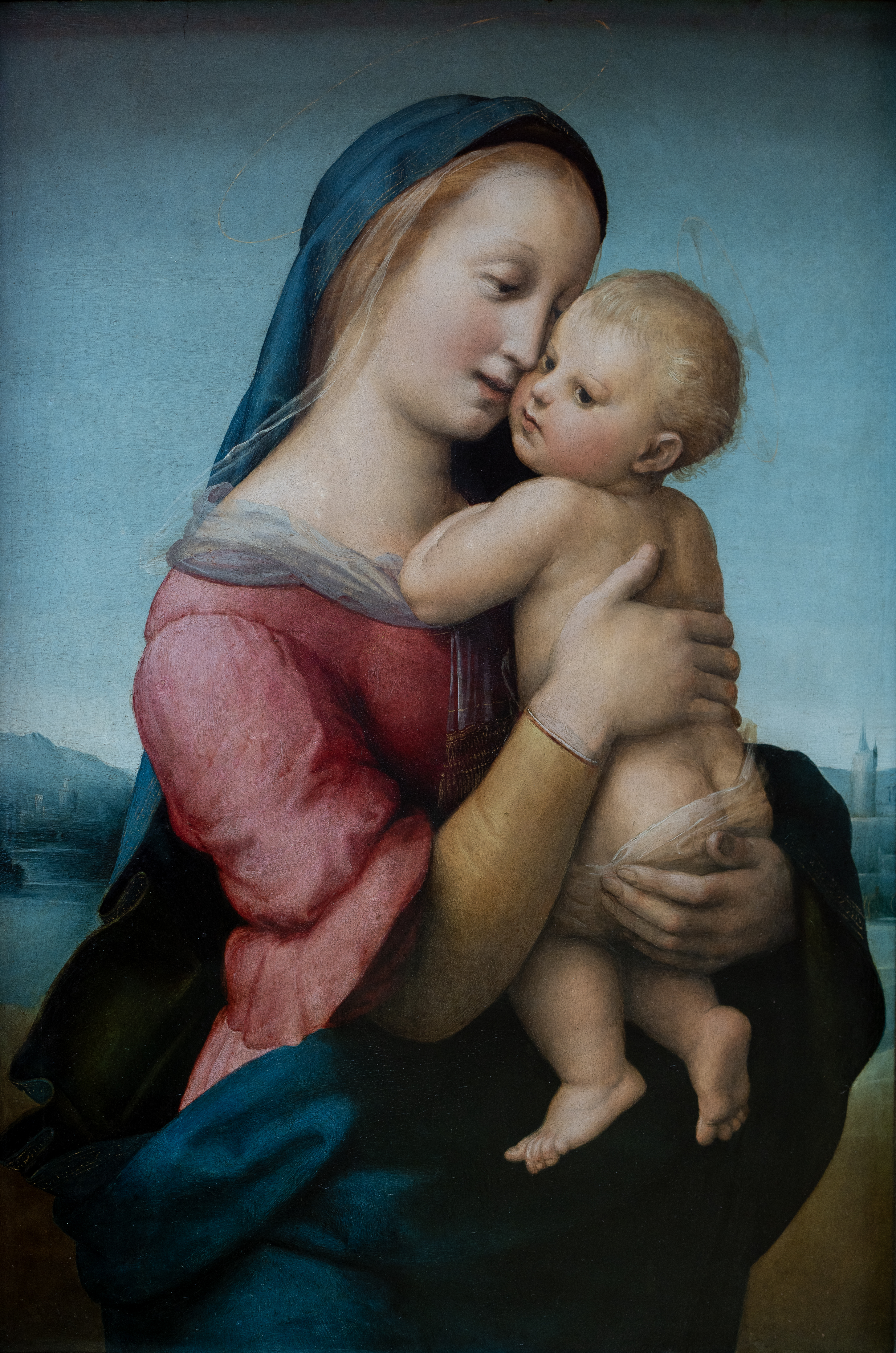
I don’t read personal writing, it bores me, why would I write it? This once, though, I’ll allow a self-insertion. The ideal way to have attended the Raphael show at the Metropolitan Museum in New York, which closes tomorrow, is as I’ve done—while pregnant. The artist’s way with rendering infants is apparent early on in the chronologically organized exhibition, from at least 1503, even before he began working in Florence around age twenty-one. A fair number of Raphael’s rightly venerated Madonna and Child paintings are in the show, but the revelation here, and the works that most demonstrate his sympathy with and mastery of the infant form, how babies reach and lounge, grasp and squirm, behaving and communicating through their whole body, are the drawings.
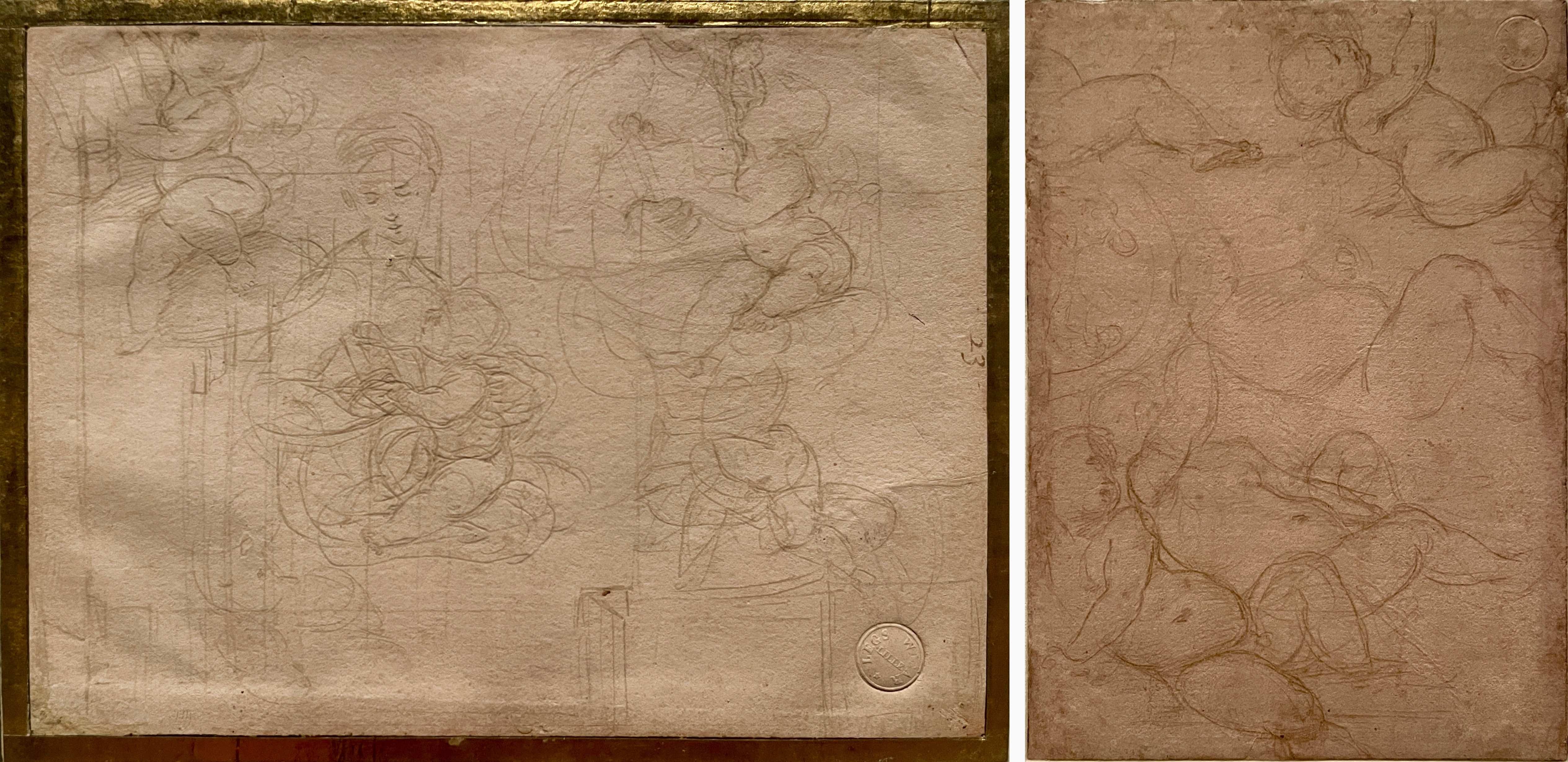
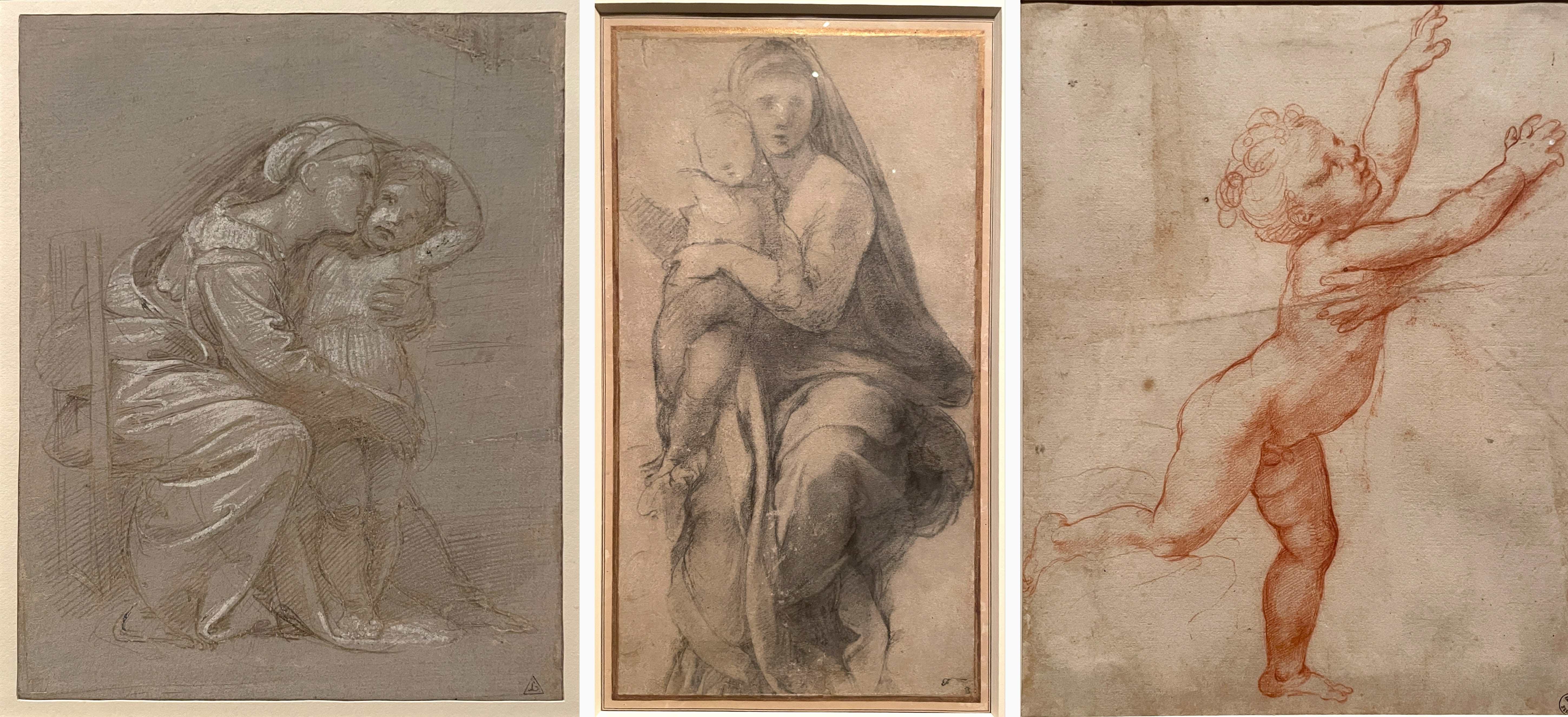
For reasons of biography and artistic technique, Leonardo and Michelangelo are referenced several times in the exhibit texts, though their invocation primarily brought to my mind the refusal, or inability, of Raphael’s High Renaissance peers to see and depict the mother-child relationship, and babies in particular, quite as the younger artist from Urbino did. Leonardo’s drawings of the fetus in the womb are significant in the history of embryology no less than in the history of art, and thank goodness Raphael didn’t share his clinical detachment. By contrast, the studies on paper brought together here are practically devotional. I thought only a child’s own parent, under the spell of love, could ever pay this type of attention—to every toe, every fleshy fold, every angle of each twisting, flexing limb.
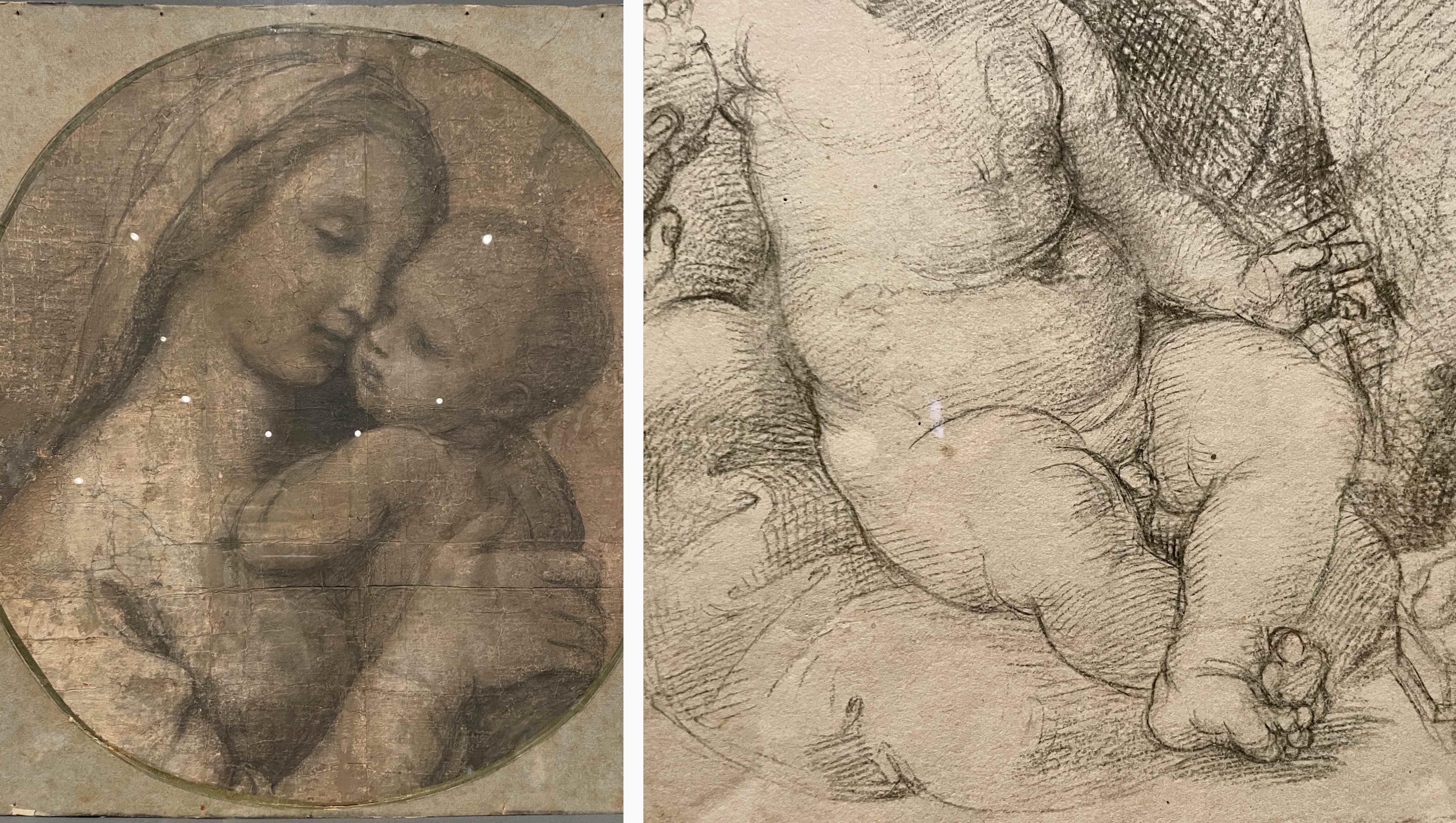
I was most moved by the artwork in probably the most fragile condition, a black chalk drawing that survives in six paper fragments glued to a board (below left). The image is of Mary holding the Christ child’s face cheek-to-cheek against her own, a motif known as the “Virgin of Tenderness,” common in Byzantine icons from the twelfth century on and later found throughout Western art. The sheet was a preparatory drawing, its design transferred directly to the wood panel on which Raphael painted the Tempi Madonna, now at the Alte Pinakothek in Munich. I’ve only seen that painting in reproduction, but for me the bond between mother and child is more palpable—really overwhelmingly so—in the chalk cartoon.
I was primed to take in Raphael’s works this way because my mind is on babies, because I’ve nursed and nurtured a child through infancy, because I’m again saturated in pregnancy hormones. A mother’s embodied knowledge, the form of knowing that comes from experience rather than recorded facts, or the accounts of others, or data, no matter how poured over or “internalized,” is just one kind. We all carry unmediated, embodied knowledge around with us. Great art calls to this most personal form we have of knowing.
It’s an utter truism of course to call Raphael’s studies of infants devotional: In the baby Jesus, he is depicting both a human child and God. For museumgoers who follow Christian traditions that practice the veneration of images, the Madonna and Child paintings are experienced in an entirely additional dimension, related to but distinct from the aesthetic, emotional, historical, cerebral. The embodied knowledge of faith shapes and focuses their encounters with such works.
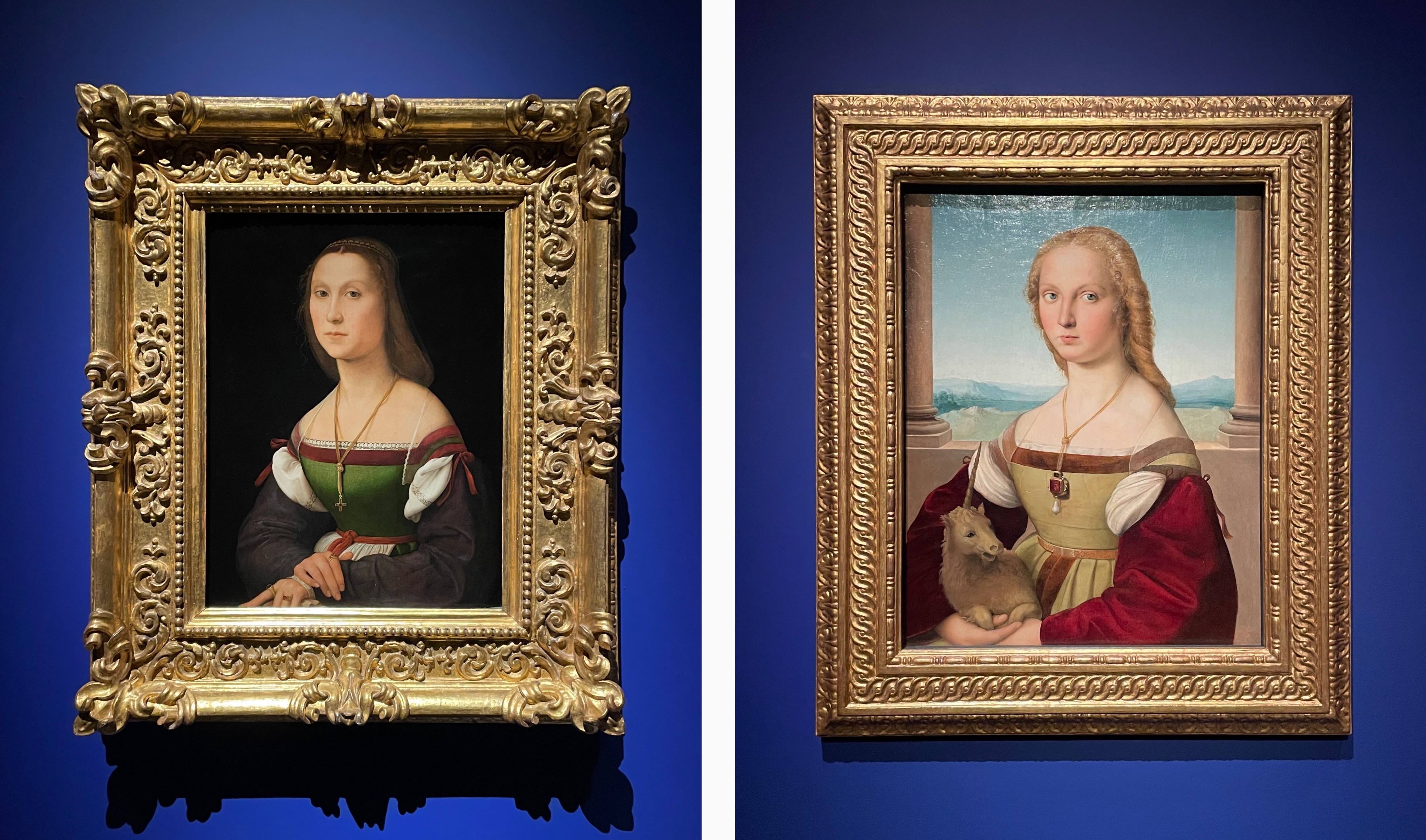
Anyone with their own understanding of human nature, which is to say, anyone who’s lived and taken an interest in others, would be captivated by Raphael’s five portrait paintings on loan from Paris, Washington, D.C., Urbino, and Rome and now hanging together in the round at the Met. Who in the five centuries that have followed has bettered the artist’s psychological penetration of his subjects? Attendees over a certain age know from life the gaze of the Young Woman with a Unicorn, simultaneously wary and naive, as that reserved for youth. Raphael’s La Muta is identified here as possibly the recently widowed Giovanna Feltria della Rovere, and viewer opinions, formed by personal experience, will differ on the temperament her intense look communicates—whether angry or stoical, formidable or defeated. All can agree her lips and left index finger show her to be a woman of precision.
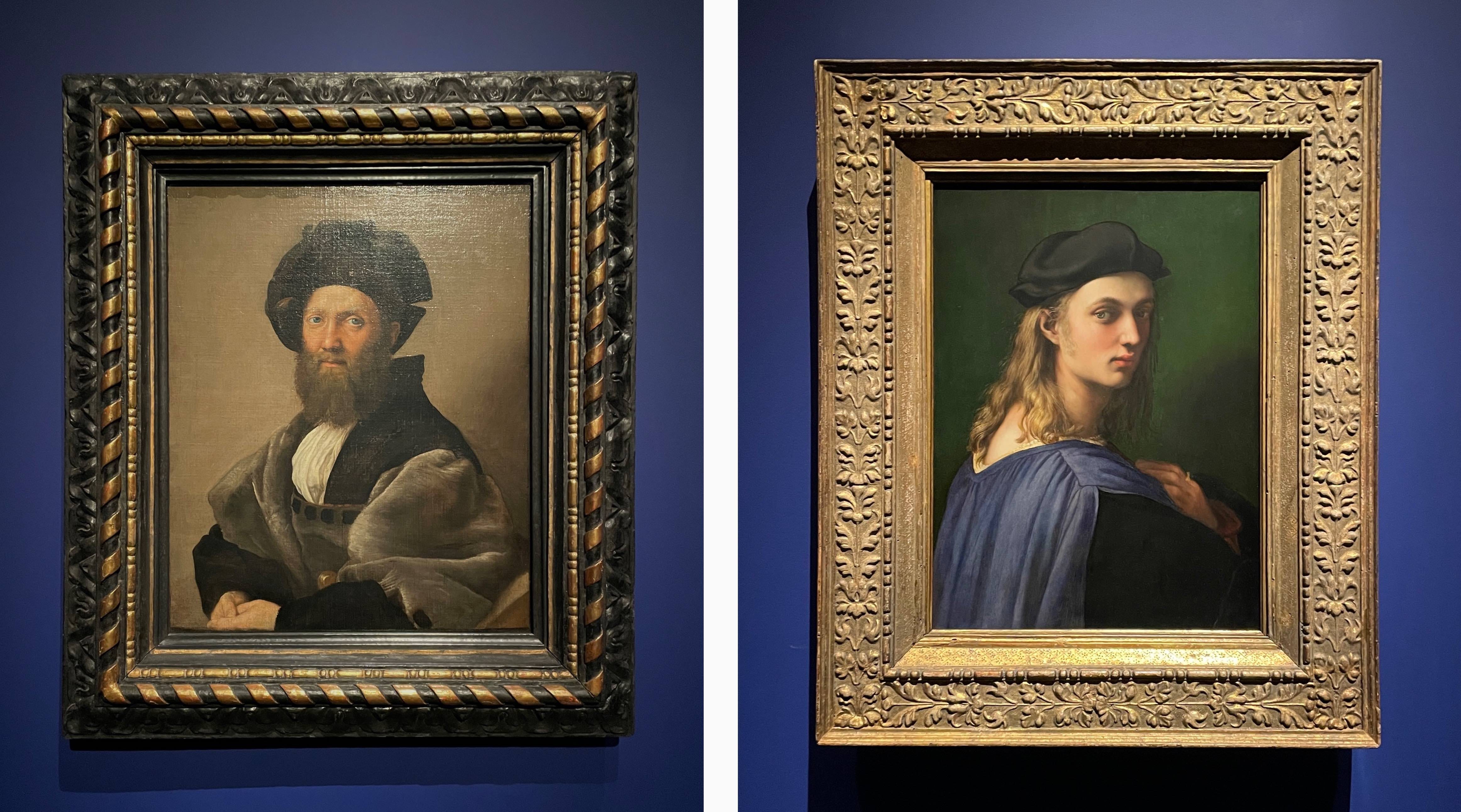
The humanist Baldassare Castiglione, who was writing but still very far from publishing The Book of the Courtier at the time of his portrait, was a friend of the artist’s, and this muted painting seems, to me anyhow, full of affection. Raphael gives us not the public man—the courtier as a type, effortlessly graceful and eloquent—but the private individual whom he knows and loves, with his honest and vulnerable eyes, with hands that betray a touch of self-consciousness.
Experiences of great art are as much part of life as other events are, major and minor. They make up life’s substance, not its decoration. Museum visitors bring with them various degrees of art historical knowledge attained cumulatively over hours and years, through time walking around museums, reading books and browsing monographs, clicking through online collections, conversing, revisiting notebooks, photographs, and prints. What might start as mediated knowledge—information one gathers about art, received from survey or historical or opinion writing and videos—is expanded and moulded through encounters with artworks to the point where a person discovers an internal map of what they know has formed within them, a map completely one’s own, with self-made connections as numerous as those gleaned from elsewhere, a map more and less detailed in places, depending on inclinations and attractions one hardly bothers questioning but is content to trust. Cultivating this kind of unmediated knowledge means loving art.
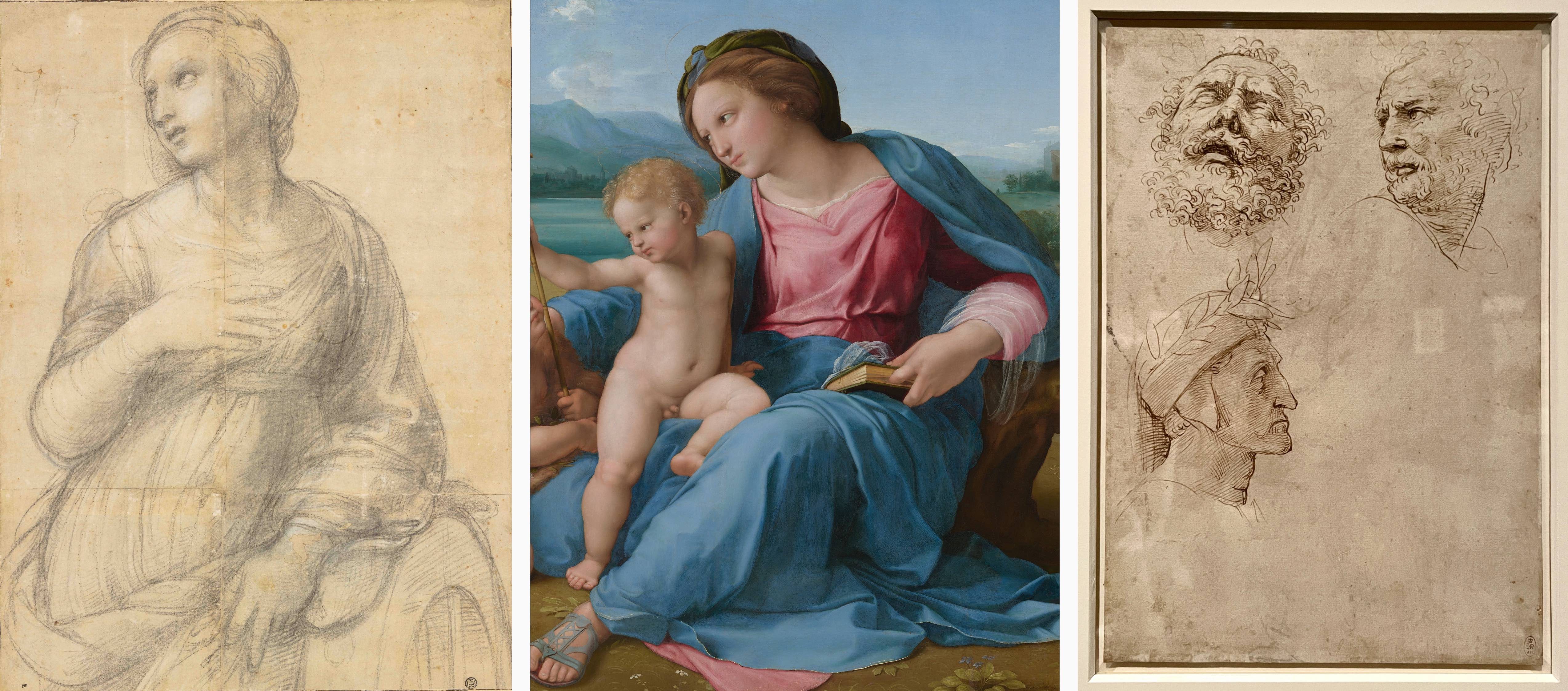
Those who know Raphael trained under Perugino always see something of master Pietro’s faces in his pupil’s early solo works. Many at this show will immediately recognize Raphael’s Saint Catherine drawing from its resultant painting at the London National Gallery. Her posture is one of the more indelible in Renaissance art, all animation and balance: her captivated turned head, one hand drawn to her chest in almost disbelief, the other steadying her legs. Audiences aware of the most basic formal stages in the depiction of Mary from the medieval period on can note the details (attending angels, a throne, gold-leaf haloes) Raphael does without. That person knowing late fifteenth century innovations in art, both narrative and pictorial, feels especially strongly the Alba Madonna’s modesty—how the natural landscape is granted a holy splendour new to art, how Mary sits on the ground requiring no ceremony, her graceful form monument enough. Those who’ve stood in the Vatican’s Raphael rooms not only will recognize the drawn designs on show but will appreciate as others can’t the technical feat by which the studies were scaled up to mural size, and the artist’s vision in foreseeing those effects. A glance at the label of the most beautiful portrait here might be meaningful, the name Bindo Altoviti conjuring for some the Florentine banker to the papacy beloved by many great artists, among them Michelangelo and Raphael, to whom he was friend and patron, represented here with a hand to his heart. Reproduction doesn’t begin to capture the painting’s gorgeously naturalistic textures, his flowing hair, floppy cap, living skin in shadow and in light.
Our experts tell us the first great professional casualties of AI will be white-collar knowledge workers: lawyers, accountants, financial advisors, programmers, data analysts, consultants. The value of specialist knowledge has, until now, always been underwritten by its scarcity, and AI knows only abundance. In the long run, some clairvoyants say, human knowledge stands to have no monetary value whatever.
We all must live, and with the dignity of means and worthwhile work. But the knowledge that machines can disseminate is hardly the kind of knowing that makes life worth living—rather, embodied knowledge is, as art encounters demonstrate to those of us who know this most obviously. Just as often as great art defamiliarizes the world, returning us to its and our strangeness, art too brings to the surface of our conscious minds how richly—how knowledgeably—we live in the world, and in history, and with others.
New essays have been appearing here somewhat less frequently than before because I’ve been writing a book, about the Muses. When I have any news about its status, I’ll share with you. Thanks for reading.


"The ideal way to have attended the Raphael show at the Metropolitan Museum in New York, which closes tomorrow, is as I’ve done—while pregnant." ! That's a wonderful thought, wonderful being just right for a Madonna and Child. I saw the exhibition, though not in an ideal condition.☺️
Woe to all who did not attend. And that word attend seems just right, too.
Without your empirical knowledge of motherhood, I nevertheless underwent the shock of recognition when I saw those three Raphael studies of mother and baby. The enfolding of the maternal arms around the chilld, the implied restlessness of the baby--they all looked familiar and real in a way I've almost never seen in Madonna and child paintings of that period. Was there a mandatory distancing between the Madonna and her exalted offspring expected by the Church? Or were the other painters simply not observant enough, or talented enough to capture genuine mother-child interaction?